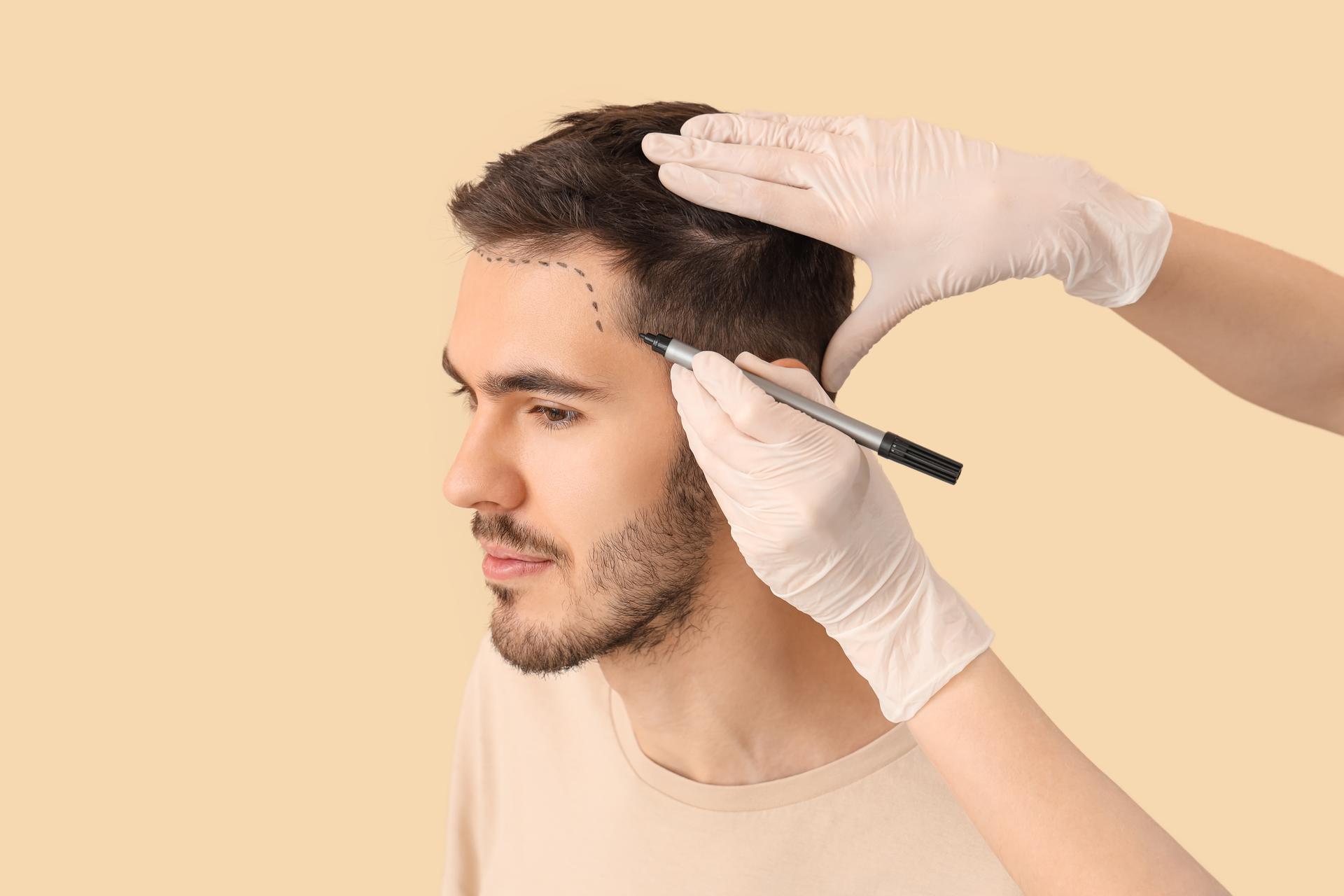
You’ve probably spent more time than you’d like to admit studying your hairline in mirrors, wondering if anyone else notices the changes you see. The idea of a hair transplant may have crossed your mind, but you’re wondering what your options are, and whether any of them can produce the natural results you want.
Both Follicular Unit Transplantation (FUT) and Follicular Unit Excision (FUE) can produce results that fool everyone, including your barber. The technique matters less than the surgeon performing it and how well the approach matches your specific needs.
At New Jersey Hair Restoration Center in Freehold, Dr. Emil Shakov has trained extensively in both methods through the Hair Transplant 360 program, a rigorous curriculum covering hairline design, harvesting techniques, and graft placement. That dual expertise means he has more options when recommending what will work best for you.
What Makes a Hair Transplant Look Natural?
A truly natural result isn’t just about having more hair. The transplant hair must behave the way hair should, growing in the right direction with the right density in the right places. Nobody’s hairline is a perfect straight line. Natural hairlines are slightly irregular, with some recession at the temples and variations in density.
The factors that determine natural appearance include:
- Hairline design: Does it suit your face shape, age, and natural hair pattern?
- Graft placement angle: Hair doesn’t grow straight up. It lays at specific angles that vary across your scalp.
- Density distribution: More density at the hairline, gradually decreasing toward the crown.
- Single-hair placement at the edges: Natural hairlines start with fine, single hairs before transitioning to multi-hair follicular units.
- Donor area preservation: The back and sides of your head should still look normal after harvesting.
A skilled surgeon like Dr. Shakov accounts for all of this regardless of technique.
How FUT Creates Natural-Looking Results
Follicular Unit Transplantation (FUT), sometimes called the “strip method”, involves removing a thin strip of scalp from the donor area at the back of your head. That strip is then dissected under microscopes to isolate individual follicular units (natural groupings of one to four hairs).
The Graft Quality Advantage
Because follicular units stay in their natural groupings until the moment of transplantation, FUT grafts tend to be exceptionally intact. There’s less handling, less time outside the body, and less potential damage to the follicle. This often translates to strong survival rates and robust, healthy growth.
Dr. Shakov frequently notes that FUT’s microscopic dissection allows for selection of single-hair grafts. These fine, wispy hairs create the most natural-looking hairline edge. When you need that soft, gradual transition from forehead to hair, having a large selection of single-hair units is beneficial.
Higher Graft Yield Per Session
FUT typically produces more grafts in a single procedure than FUE. Higher graft counts mean better density coverage in a single session, which often produces a more dramatic transformation without requiring multiple procedures.
The Trade-Off: A Linear Scar
FUT leaves a thin linear scar at the donor site. For most patients who wear their hair at least half an inch long, this scar remains completely hidden. But if you prefer a buzzcut or fade that goes short at the back, FUT may not be your best option.
How FUE Creates Natural-Looking Results
Instead of removing a strip, Follicular Unit Excision (FUE) involves the extraction of individual follicular units one at a time with a tiny circular punch tool. These grafts are then placed into the thinning areas just like with FUT.
Minimal Visible Scarring
FUE’s biggest advantage is what it doesn’t leave behind. There’s no linear scar. The tiny dot-like marks from individual extractions become virtually invisible once healed, even with very short haircuts. For guys who keep their hair cropped close, this is often the deciding factor.
Versatile Donor Options
FUE allows Dr. Shakov to harvest from areas beyond the traditional donor zone. In some cases, Dr. Shakov can extract follicles from the beard, chest, or other body areas to supplement scalp donor hair. This flexibility helps patients with limited traditional donor supply and allows for better matching of hair characteristics in different scalp zones.
Precise Hair Placement
Modern FUE tools, including implanter pens, enable extremely precise control over graft placement. This high degree of customizability helps Dr. Shakov to replicate natural growth patterns and can improve graft survival rates.
The Trade-Off: Time and Cost
FUE takes longer than FUT because each follicle is extracted individually. A session that might take four hours with FUT could take six to eight with FUE. This typically translates to higher costs. Recovery, however, tends to be quicker. Most FUE patients return to normal activities within five to seven days versus ten to fifteen for FUT.
Head-to-Head: Comparing the Natural Outcomes of FUT vs. FUE
Which hair restoration technique actually looks more natural? Here’s how they stack up:
Hairline Naturalness
Verdict: Essentially equal with an experienced surgeon.
Both techniques can produce hairlines that look authentic. FUT may offer a slight edge when you need a large number of ultra-fine single-hair grafts for the hairline edge, but FUE in skilled hands produces equally natural transitions.
Density & Coverage
Verdict: FUT has an advantage for extensive hair loss.
When maximum density is required in a single session, which is typically for patients with advanced hair loss, FUT’s higher graft yield per procedure gives it an edge. For mild to moderate thinning, both techniques achieve comparable density.
Long-Term Growth
Verdict: Both excellent, with FUT showing marginally higher survival rates in some studies.
FUT’s minimal graft handling may contribute to slightly better long-term survival in some cases, but the difference is small. Both techniques produce permanent results because the transplanted hair comes from areas that are genetically resistant to balding.
Donor Area Appearance
Verdict: FUE wins for short-hair wearers.
If you wear your hair long enough to cover the back of your head, FUT’s linear scar is invisible. If you prefer very short styles, FUE’s scattered dot scars are less noticeable.
What Else Impacts Natural Hair Transplant Results
- Surgeon Skill: A skilled surgeon produces natural results with either technique. An inexperienced one can produce unnatural results with both.
- Your Specific Hair Loss Pattern: Not every patient is equally suited for both techniques. Factors like your degree of hair loss, donor hair density, scalp flexibility, and hair characteristics influence which approach will work best.
- Personalized Treatment Planning: Cookie-cutter approaches produce cookie-cutter results. Dr. Shakov spends significant time during consultations mapping out exactly how your transplant should look based on your unique characteristics.
- Realistic Hairline Design: A natural hairline isn’t perfectly straight or positioned where it was when you were eighteen. Good surgeons design hairlines that look right now and will continue to look right in twenty years.
Which Hair Restoration Method Is Right for You?
Consider FUT if:
- You have extensive hair loss requiring maximum graft coverage in a single session
- You typically wear your hair medium-length or longer (to easily conceal any linear scar)
- You want the potentially higher graft survival rates that come with minimal handling
- Your budget is more suitable for FUT than the higher FUE costs for comparable graft counts
Consider FUE if:
- You prefer very short hairstyles or want the flexibility to wear your hair any length
- You have limited donor hair and may benefit from harvesting from multiple body areas
- Faster recovery appeals to you (most FUE patients resume normal activities within a week)
- You want to avoid sutures and linear scarring
Meet With Dr. Shakov To Discuss Your Options
Hair loss is personal. The decision to do something about it is personal. And choosing the right approach is, too.
Patients travel from throughout Central New Jersey—Monmouth County, Ocean County, Middlesex County, and the Shore area—for treatment at the New Jersey Hair Restoration Center. If you’re ready to explore what’s possible, schedule a consultation online or call 732-365-4533.