You’ve been thinking about a hair transplant for a while now, maybe years. And now you’re wondering if you missed the window.
This is one of the most common questions patients bring to board-certified surgeon Dr. Emil Shakov at New Jersey Hair Restoration Center in Freehold, NJ: am I too late? Should I have done it sooner?
The answer may surprise you.
There is no hard cutoff, no age where hair transplant surgery stops being an option. But the timing does affect the kind of plan that makes sense for you. The earlier you understand your options, the more flexibility you’ll have.
What Determines Your Hair Transplant Candidacy?
A lot of patients assume that being a candidate for a hair transplant comes down to age. It doesn’t. A 55 year old with strong donor density may be a better candidate than a 28 year old with rapidly progressing thinning and limited donor reserves.
What really determines hair transplant candidacy is the balance between what you need and what your body can provide. A hair transplant redistributes healthy follicles from the back and sides of your scalp (the areas that tend to be most resistant to the effects of male pattern baldness) into thinning or bald regions. As long as you have enough healthy donor follicles, you can be a candidate regardless of your age.
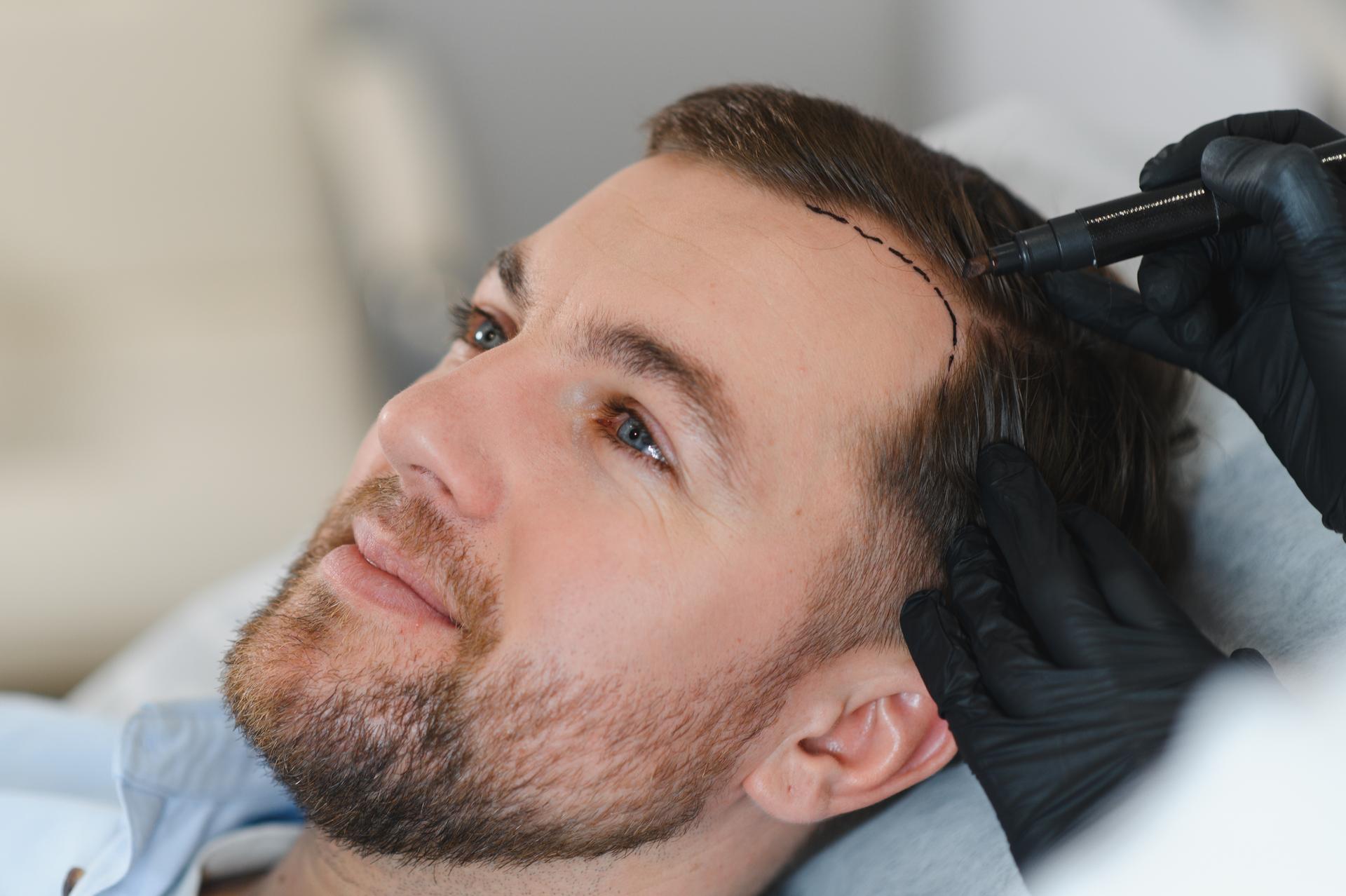
During a consultation at New Jersey Hair Restoration Center, Dr. Shakov evaluates donor hair density, the current pattern and stage of hair loss, your hair’s texture and growth direction, and where your loss is likely headed over time. This thorough evaluation is what separates a cookie cutter recommendation from a strategy that gives you a great result now and in the future.
How Does Hair Loss Severity Affect Treatment Planning?
The stage of your hair loss doesn’t just determine whether you qualify for a transplant. It also affects which type of procedure is likely to give you the best outcome.
FUE (Follicular Unit Extraction)
If your thinning is more localized, FUE tends to be an excellent fit. Dr. Shakov, who trained through the Hair Transplant 360 program (a specialized training course in both FUE and FUT techniques), individually extracts follicular units from the donor area using tiny punches that leave no linear scar. This makes FUE popular with patients who keep their hair on the shorter side, since there’s nothing to hide on the back of the scalp after healing.
The tradeoff is that FUE harvests follicles one by one, so it takes more time per session than the strip method, and the cost per graft tends to be a bit higher.
FUT (Follicular Unit Transplantation)
FUT removes a thin strip of tissue from the donor area, and individual follicular grafts are dissected from that strip under magnification. As FUT can yield a higher number of grafts in one session, it may be a better choice for patients with more extensive loss who need broader coverage.
There is a trade off. FUT does leave a fine linear scar along the back of the scalp (typically about 1mm wide). For patients who wear their hair at a medium or longer length, it’s rarely noticeable. For patients who buzz their hair, FUE may be more practical.
Can You Get a Hair Transplant If Your Hair Loss Is Advanced?
When hair loss becomes more advanced, Dr. Shakov’s treatment planning approach changes.
Instead of asking “how do we restore everything?” the better question is “how do we make the most of what you have?
Even in cases of advanced hair loss, a well planned transplant can yield improvements. Dr. Shakov will focus on concentrating density in areas where it will have the greatest visual impact.
This is when your surgeon’s experience becomes especially critical. Dr. Shakov’s background in aesthetic surgery, combined with his hair-specific training, allows him to design hairlines and graft placements that account for the way your face is structured, not just where hair is missing. He maps the density, direction and growth angle of your existing hair before placing a single graft, so new growth blends in seamlessly.
Realistic expectations matter here, too. A patient with extensive loss and limited donor supply may not achieve the same overall density as someone who began treatment earlier. But a carefully executed transplant can still produce a significant visual improvement and give you a result that looks full and proportionate.
Why Is It Important to Stabilize Hair Loss Before Transplant Surgery?
One of the most frequently overlooked aspects of hair restoration is that a hair transplant does not stop future hair loss.
If you’re still in the process of active thinning, the existing hair around your transplanted grafts can continue to fall out. That can lead to an uneven look down the road, with your transplanted hair standing strong in one area while neighboring areas keep thinning. It’s the reason many experienced surgeons recommend medical management as a first step before scheduling surgery, or as a complementary treatment.
At New Jersey Hair Restoration Center, treatment plans frequently include finasteride (which blocks DHT, the hormone responsible for follicle miniaturization in androgenetic alopecia) and minoxidil (which improves blood flow to follicles and helps prolong the growth phase).
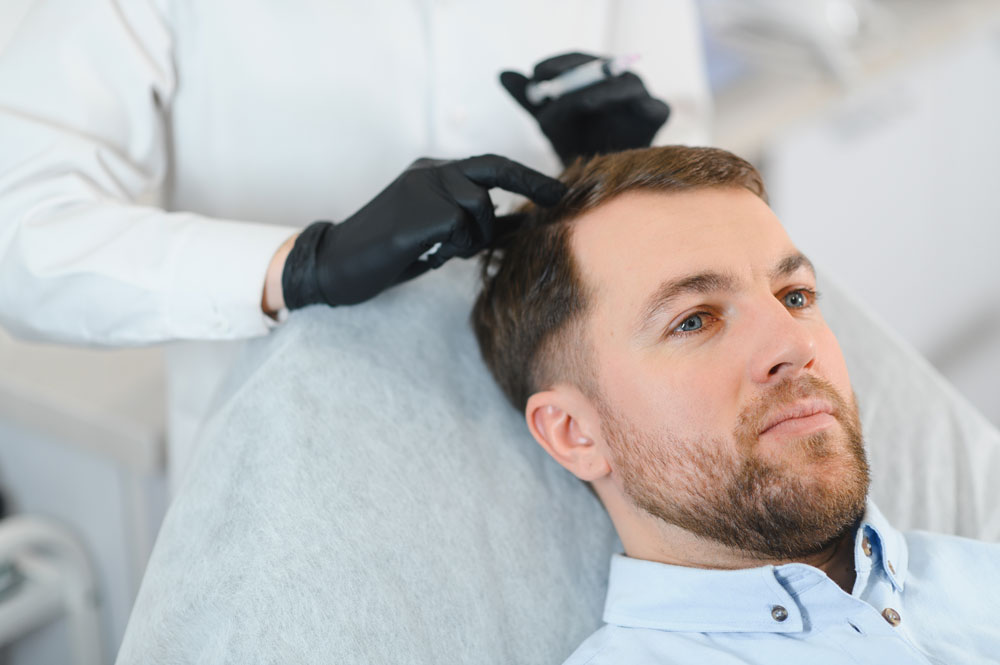
In addition to medications, we also offer regenerative therapies like PRP (platelet rich plasma), PepFactor and exosome treatments that support follicle health and scalp vitality.
The goal of this kind of combined approach is to slow or stop active loss before transplanting, so the grafts you receive have the best possible chance of blending with healthy, stable surrounding hair.
Build a Long-Term Hair Restoration Strategy
The best hair restoration outcomes come from a strategy that accounts for where you are now and where your loss is heading.
For some patients, FUE produces everything they need in a single session with minimal downtime. Others benefit from FUT for the higher graft count, or a combination of both techniques. And if surgery isn’t the right fit yet (or at all), options such as medical management with finasteride and minoxidil, PRP, PepFactor or exosome therapy are available.
So, when is it too late? For most patients, the answer is: it’s probably not. But the sooner you understand your options, the better those options tend to be.
Schedule your consultation at New Jersey Hair Restoration Center in Freehold, NJ, or call 732-365-4533.