If you are researching hair restoration, chances are you want a clearer answer to one question: what actually happens on hair transplant day? A FUE hair transplant procedure is carefully planned, detail-driven and typically more comfortable than many people expect. Still, it is normal to feel nervous about details like what kind of anesthesia will be used, the length of the appointment or what recovery looks like afterward.
At New Jersey Hair Restoration Center in Freehold, NJ, we want the process to feel as calm and straightforward as possible, from your first consultation to your immediate aftercare plan. This guide walks through each phase of a typical hair transplant procedure day, explains what you may feel at each step and helps you understand why early action matters if you notice ongoing hair loss or signs of male pattern baldness.
What Is FUE? How Does FUE Work?
FUE stands for follicular unit extraction, a hair transplant technique designed to restore hair with minimal disruption to surrounding tissue. During an FUE procedure, Dr. Shakov carefully removes individual hair follicles from a donor area (typically the back or sides of the scalp) and transplants them into areas affected by hair loss.
What To Expect During Your FUE Hair Transplant in New Jersey
Your treatment plan for your FUE hair transplant will be personalized, however the overall experience follows a typical sequence, outlined below.
Preparing for Your Procedure
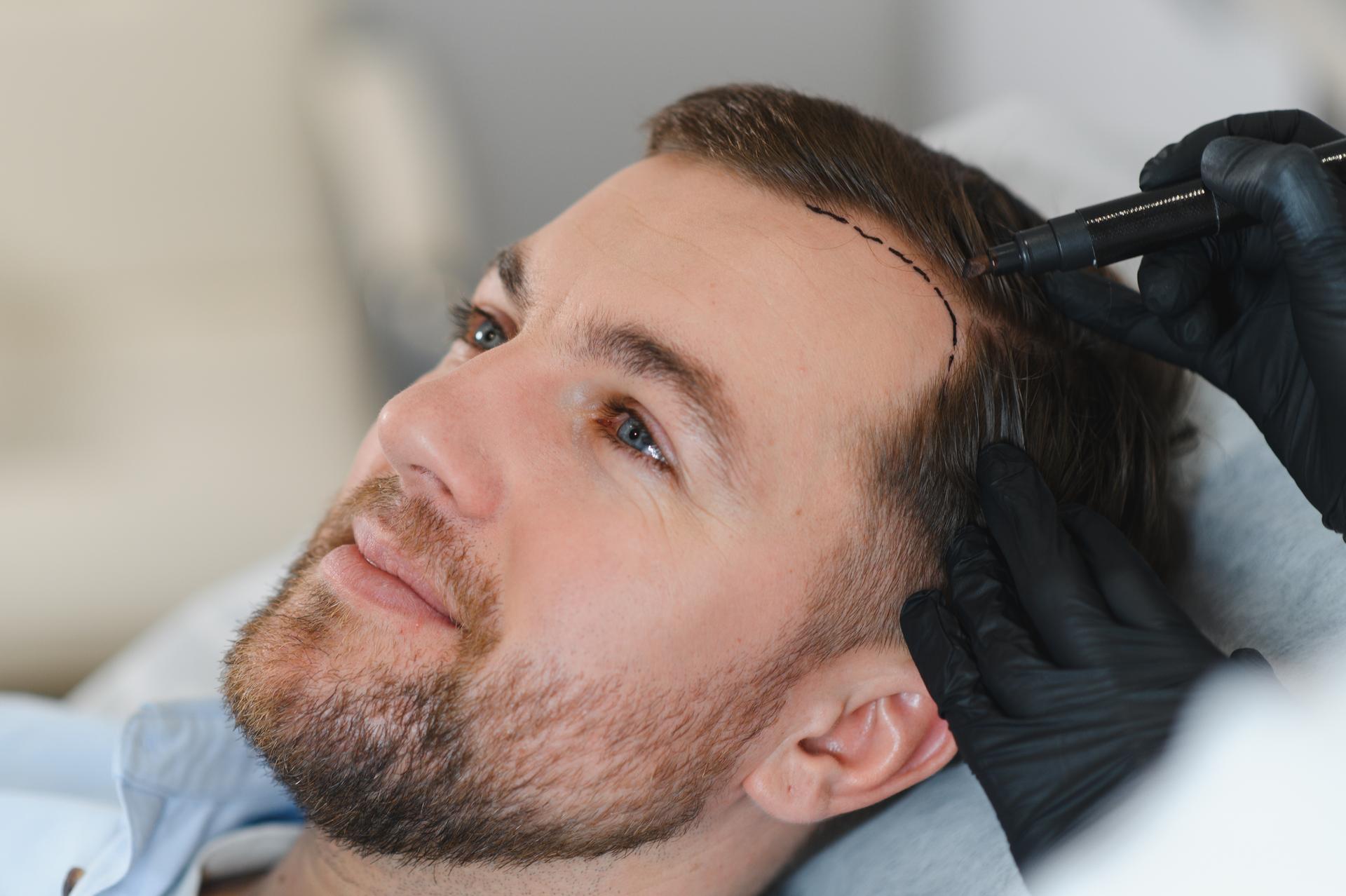
Your experience starts with a final review of your treatment plan. Dr. Shakov will confirm the design of your hairline (if relevant) and graft placement strategy based on your hair loss pattern and long-term goals. This is also the time to ask any last-minute questions you have, so you feel comfortable moving forward.
Photos may be taken for documentation, and the donor and recipient areas are prepared. If you are addressing male pattern baldness, the design is planned to look natural, not only immediately after healing but also as hair loss continues over time.
Administering Anesthesia for Your Comfort
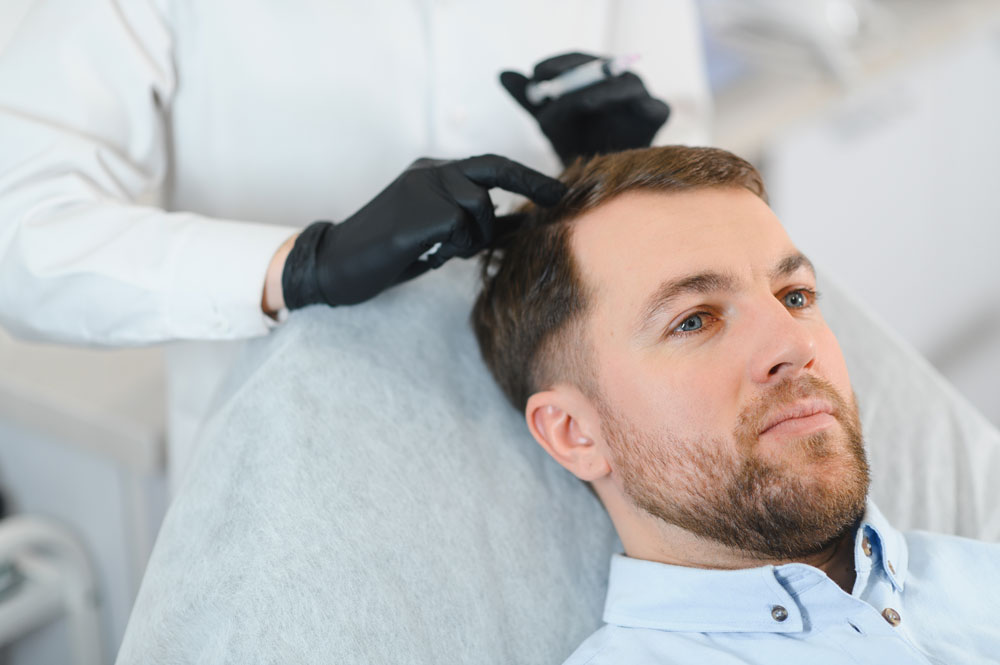
Dr. Shakov uses local anesthesia to numb both the donor and recipient areas. Most patients describe the numbing process as brief and manageable. Once the anesthesia takes effect, your discomfort will be minimal.
Throughout the procedure, the NJHRC team monitors your comfort and can adjust your anesthesia as needed. You will remain awake and able to communicate, listen to music or relax during treatment. Our patients often find the FUE experience is far less intimidating than they expected.
Follicle Extraction From the Donor Area
The extraction phase is where the FUE technique truly differs from FUT. Dr. Shakov removes individual follicular units one at a time from the donor area using a micro-punch tool. This approach preserves the surrounding tissue and helps maintain a natural appearance in the donor region after healing.
Extraction is performed methodically to protect graft quality and manage donor density. You may feel light pressure or vibration, but pain is uncommon once anesthesia is active.
Creation Of the Recipient Sites
After follicles are harvested, we prepare the recipient area. Dr. Shakov creates tiny sites to receive each graft, with careful attention to angle, direction and spacing. This step plays a major role in how natural your final result will look.
Hairline shape, density transitions and existing hair growth patterns are all considered. This level of detail is especially important for patients experiencing hair loss that may continue to progress.
Graft Placement and Artistic Detail
During placement, Dr. Shakov inserts each follicle into the prepared recipient sites. This is the most time-intensive part of the FUE hair transplant procedure and requires precision and patience.
Dr. Shakov’s goal is to recreate your natural hair growth patterns while achieving sufficient density. Placement techniques are adjusted depending on whether the transplant is restoring a hairline, filling the crown or increasing overall coverage. This stage largely determines the visual success of your hair transplant.
Immediate Aftercare And Recovery Instructions
Once placement is complete, you will receive detailed aftercare instructions. These guidelines explain how to protect your grafts, manage swelling and care for your scalp during the first several days.
You may notice redness, mild swelling or small scabs in both the donor and recipient areas. These effects are normal and temporary. We will also review when you can resume washing your hair, exercising and returning to daily routines.
The Weeks Following Your Procedure
In the weeks after your FUE procedure, transplanted hairs typically shed. This is a normal phase of the growth cycle and does not affect follicle survival. New hair growth develops gradually over the following months.
When To Consider A Consultation For Thinning Hair
Many people wait until thinning feels “bad enough” before they seek help. The problem is that hair loss tends to progress, and donor supply is not unlimited. If you are noticing increased shedding, a widening part, a receding hairline or a crown that is slowly losing density, it is worth getting a professional evaluation sooner rather than later. A consultation with Dr. Shakov can help you understand:
- Whether you are a candidate for a hair transplant
- How your pattern aligns with male pattern baldness
- What your donor supply can support over time
Restore Your Hair With a FUE Hair Transplant
Dr. Shakov plans your FUE hair transplant procedure with attention to your hair loss pattern, future treatment options and delivering natural, lasting results. When performed with careful design and precision, FUE can restore density while preserving the health of your donor area and blending seamlessly with existing hair.
At New Jersey Hair Restoration Center in Freehold, NJ, every treatment plan begins with a personalized consultation with Dr. Shakov. This visit provides clarity on candidacy, realistic outcomes and what to expect from start to finish. Schedule your consultation today to take a proactive step toward addressing hair loss before it progresses further.