According to the American Hair Loss Association, by age 35, approximately two-thirds of American men experience some degree of noticeable hair loss. Hair loss can also affect women, with female pattern thinning becoming increasingly common with age.
When it comes time to begin researching treatment, many patients are trying to decide between PRP and hair transplant surgery.
It is a common comparison, but these treatments serve different purposes. At New Jersey Hair Restoration Center in Freehold, NJ, treatment planning focuses on preserving existing hair while creating natural-looking, sustainable results over time.
What Determines the Right Hair Loss Treatment?
One of the biggest misconceptions about hair restoration is that there is a single “best” treatment for every patient.
In reality, the most effective option often depends on whether follicles remain active enough to respond to treatment.
PRP works by supporting weakened follicles that are still capable of producing hair. Hair transplant surgery works by relocating healthy follicles from donor regions into thinning or bald areas.
Several factors help determine which approach may be most appropriate for you, including your:
- Pattern of male/female pattern baldness
- Degree of thinning
- Donor hair density
- Progression of hair loss
- Hair characteristics and texture
- Long-term restoration goals
This is one reason we recommend coming in for a consultation as soon as possible. Hair loss is multifactorial and progressive, and finding the right treatment approach early often leads to better results.
When Is PRP Recommended for Hair Loss?
PRP is often most effective during the earlier stages of hair loss. Patients experiencing increased shedding, reduced density, widening parts or gradual thinning may still have enough active follicles to benefit from regenerative treatment.
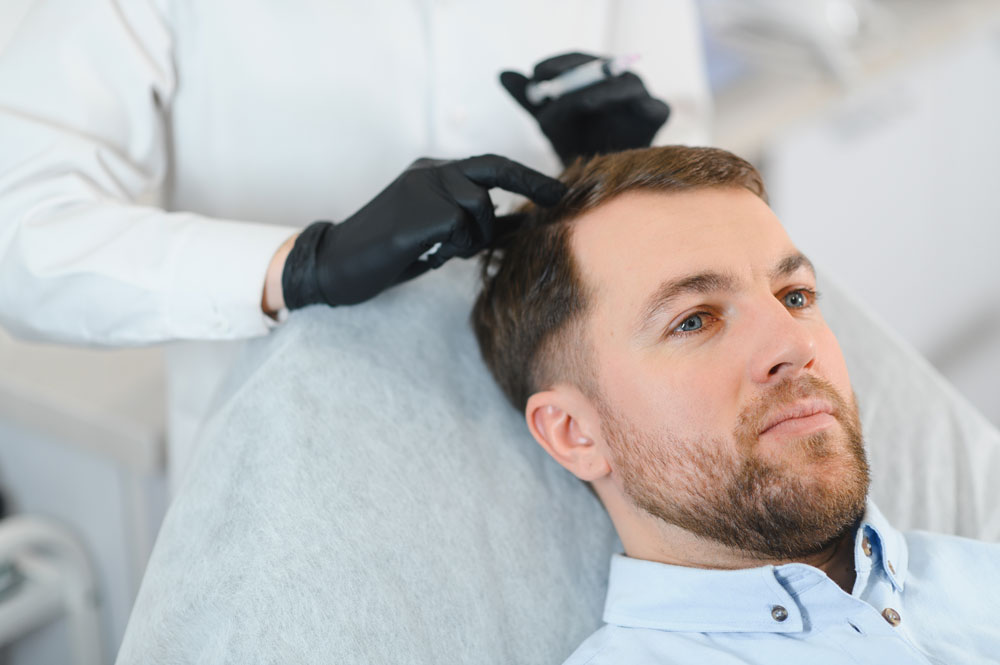
PRP, or platelet-rich plasma therapy, uses concentrated platelets from the patient’s own blood to deliver growth factors into targeted areas of the scalp. These growth factors may help improve circulation, support follicle health and strengthen miniaturizing hairs.
At New Jersey Hair Restoration Center, PRP may also be incorporated alongside microneedling or other regenerative therapies, depending on the patient’s pattern of thinning and long-term goals.
PRP may be beneficial for patients who:
- Are in the early stages of pattern baldness
- Want to strengthen thinning hair
- Want minimal downtime
- Are trying to preserve existing density
- Want to support medical management with finasteride or minoxidil
When Is Hair Transplant Surgery Recommended for Hair Loss?
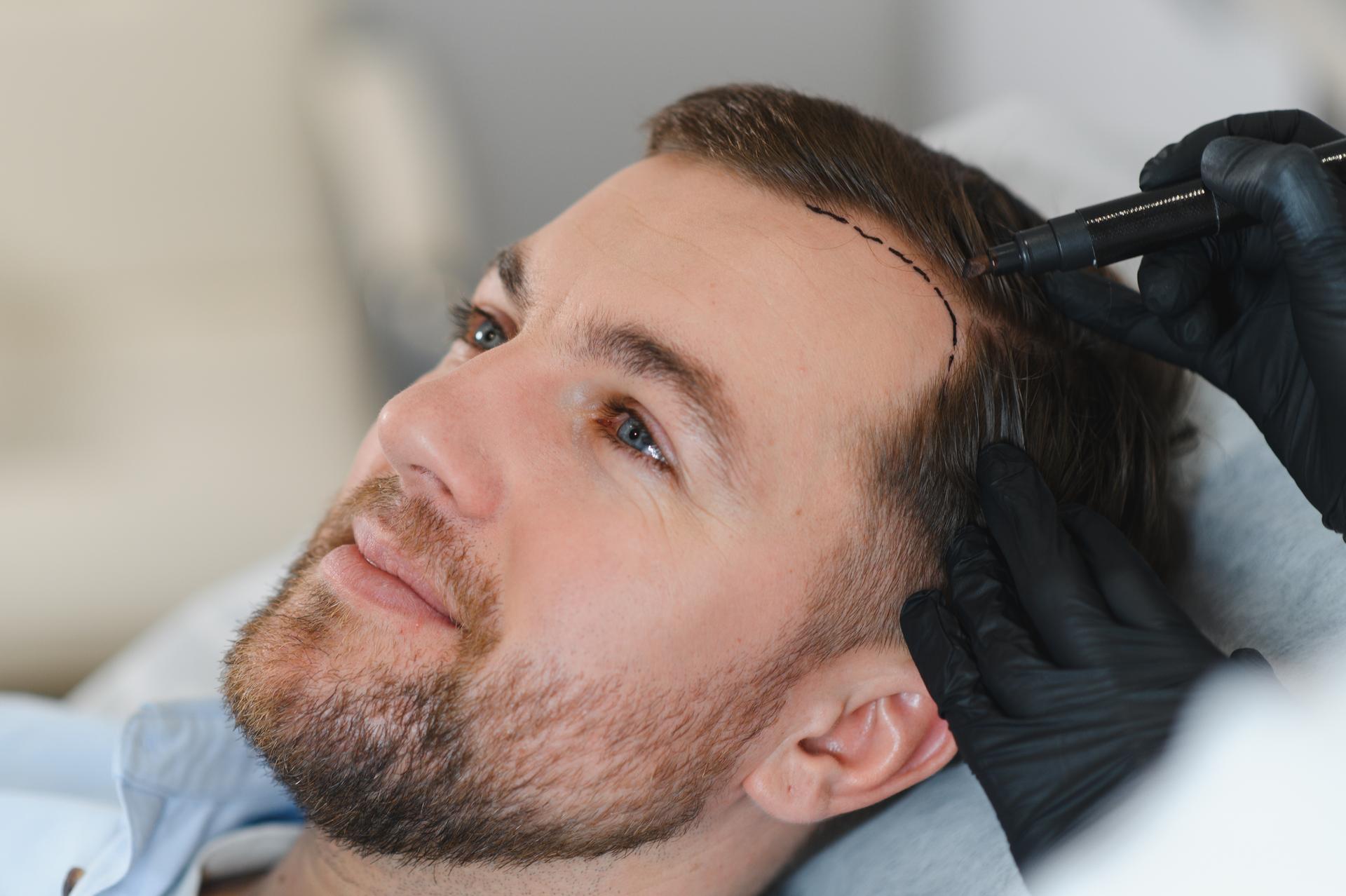
Hair transplant surgery is often recommended when hair loss progresses beyond mild or moderate thinning. Patients with receding hairlines, visible bald spots or more advanced scalp coverage loss may benefit more from follicular redistribution than follicular stimulation.
Treatment planning may involve either FUE or FUT, depending on donor availability, graft requirements and long-term restoration goals.
FUE (Follicular Unit Extraction)
FUE involves harvesting individual follicular units from donor areas and transplanting them into thinning regions. Modern FUE techniques use very small punches, typically 0.7 to 1.2 millimeters in diameter.
Because FUE removes follicles individually, it avoids the linear donor scar associated with FUT.
FUE is often appealing for patients who:
- Prefer shorter hairstyles
- Want a minimally invasive approach
- Maintain strong donor density
- Have localized areas of thinning
FUE creates small circular extraction scars throughout the donor area. In many patients, these become difficult to notice once they have healed, particularly when the surrounding hair remains at a moderate length.
FUT (Follicular Unit Transplantation)
FUT involves removing a thin strip of donor tissue to obtain follicular grafts for transplantation. Because FUT may yield a higher graft count in a single session, it can sometimes benefit patients with larger restoration goals or more advanced male pattern baldness.
Unlike FUE, FUT creates a thin linear scar within the donor area.
The visibility of either FUE or FUT scarring depends on several factors, including:
- Surgical technique
- Donor density
- Hair length
- Healing characteristics
- Post-treatment care
Modern transplant techniques are designed to minimize visible scarring while preserving donor hair strategically for future needs.
Which Treatment Is Better for Hair Loss?
Neither treatment is universally better. The right approach depends on your stage of hair loss and whether your follicles are still active enough to respond to treatment.
The best way to determine which approach may be right for you is through a professional consultation. Evaluating donor density, scalp coverage, hair loss progression and long-term goals helps create a treatment plan designed around both current thinning and future hair preservation.
Why Waiting Too Long Can Limit Your Treatment Options
Hair restoration planning often becomes more complex as thinning progresses.
As follicles continue to miniaturize or stop producing hair entirely, some non-surgical treatments may become less effective. Advanced thinning can also reduce the amount of donor coverage available for future transplantation.
This is one reason earlier evaluation can be important, even for patients who are not ready for surgery. Patients who seek treatment earlier may have more opportunities to:
- Preserve active follicles
- Slow progressive thinning
- Maintain existing density
- Delay more extensive restoration later
- Create a more flexible long-term treatment plan
For some patients, early treatment with PRP for hair, finasteride or minoxidil may help preserve density before more advanced loss develops. Others may benefit from combining regenerative therapies with future transplant planning.
Build a Long-Term Hair Restoration Plan Before Thinning Progresses Further
At New Jersey Hair Restoration Center in Freehold, NJ, we help patients understand their options through personalized evaluation and evidence-based treatment planning. Whether you are considering PRP for hair, FUE or FUT, earlier consultation can help determine the most effective path forward before thinning progresses further. Schedule your consultation today to discuss a hair restoration plan designed around your goals and long-term hair health.