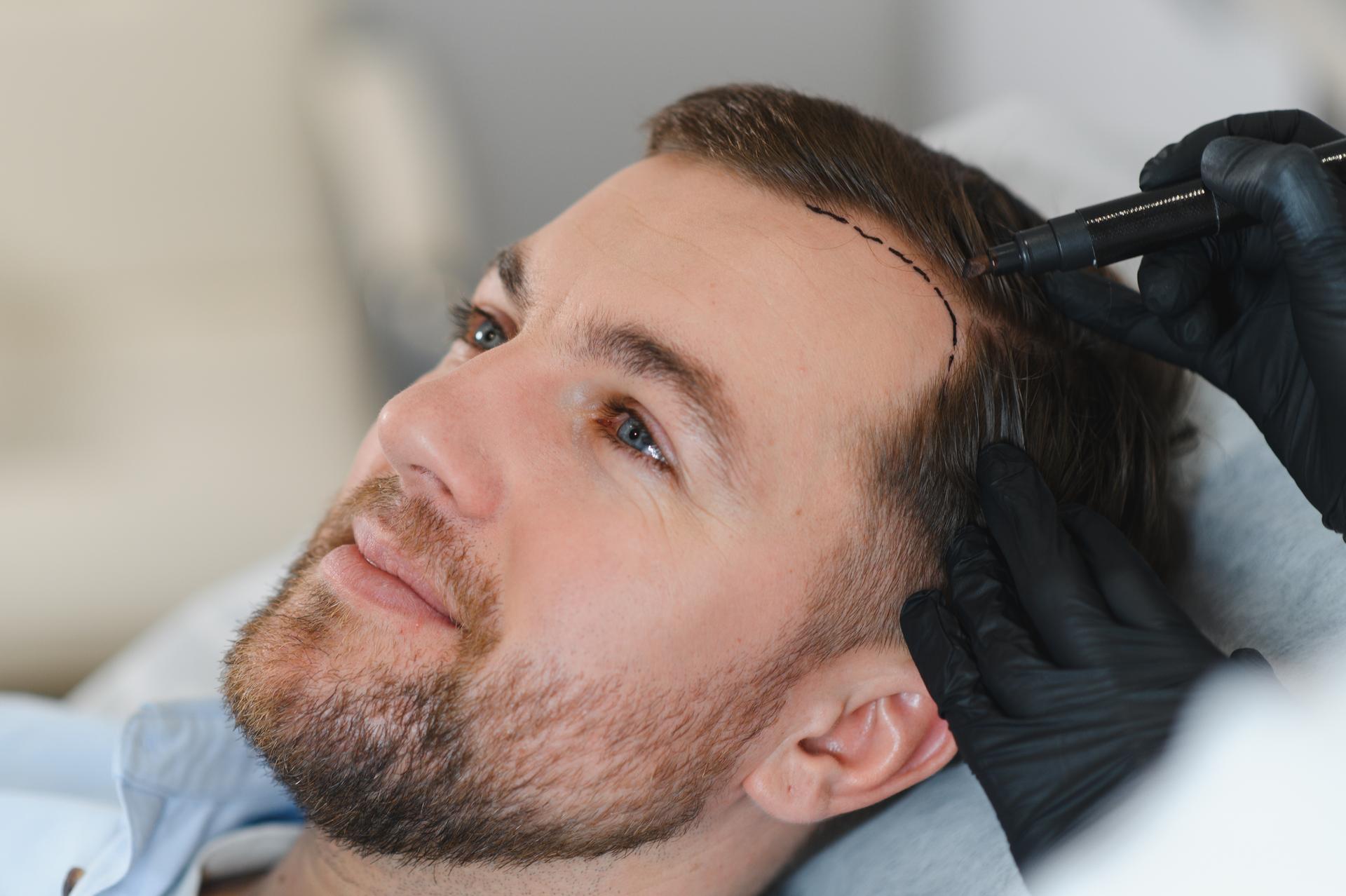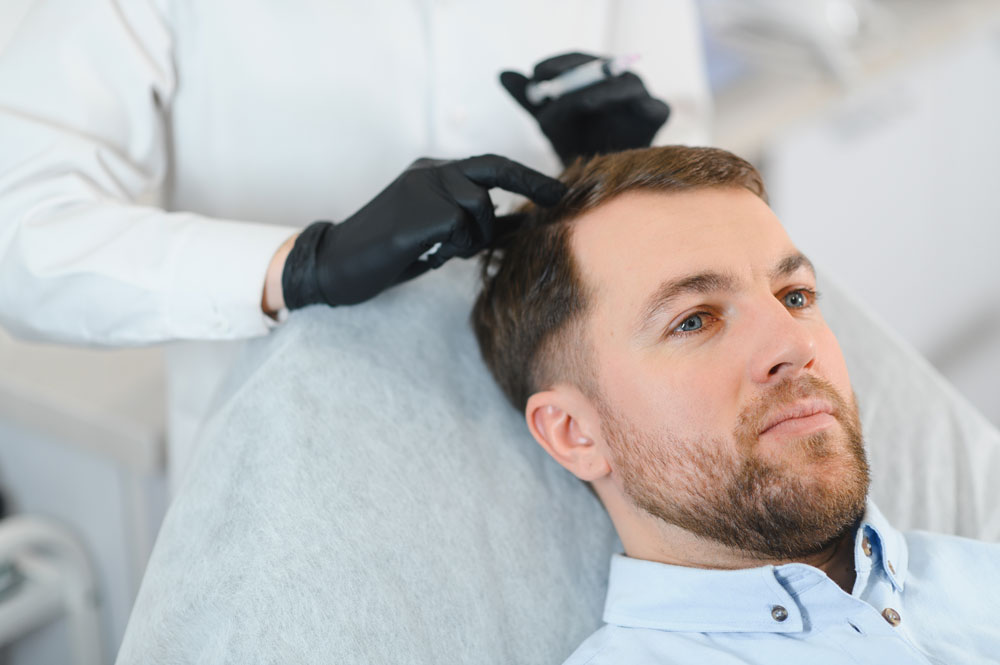
If you are considering a hair transplant, one concern often tops the list: Will it leave scars?
It is a reasonable question. Hair loss already affects confidence for many people, and the last thing patients want is to replace thinning hair with visible surgical marks.
The good news is that modern hair restoration techniques have evolved significantly. Today’s procedures are designed to minimize visible scarring while restoring natural-looking hair density. Still, there are many myths online about what actually happens after a transplant.
Understanding how scarring works can help you make informed decisions about hair loss and pattern baldness treatment. At New Jersey Hair Restoration Center, patients receive physician-led care from Dr. Emil Shakov, MD, FACS, who specializes in advanced hair restoration techniques and personalized treatment planning.
Do Hair Transplants Leave Scars?
Hair transplantation is a medical procedure. Any time skin heals after a surgical process, some degree of scarring is technically possible. The key difference with modern hair restoration is how small, controlled and discreet those scars are designed to be.
Hair transplant procedures work by removing healthy hair follicles from a donor area of the scalp and placing them in areas affected by hair loss or male pattern baldness. Because follicles must be extracted before they can be transplanted, the donor area needs time to heal.
Rather than thinking about scarring as a simple yes-or-no issue, it helps to understand how different transplant techniques affect the donor area and how visible the healing process may be. Modern procedures such as FUE and FUT create different types of scars, which is why understanding these techniques can help set realistic expectations for recovery and long-term results.
FUE Hair Transplant Scars: What Patients Should Expect
One of the most common modern procedures is FUE, which stands for Follicular Unit Excision.
With FUE, individual hair follicles are carefully extracted from the donor area using small, specialized instruments. Each follicle is then transplanted into thinning or balding areas of the scalp.
Because follicles are removed one at a time, the procedure does not involve removing a strip of scalp tissue. As a result, FUE does not create the long linear scar associated with older strip procedures.
Instead, the extraction points leave very small dot scars that are typically difficult to detect once the surrounding hair grows back. These marks are usually hidden within the donor area by existing hair growth. This is why FUE is often appealing to patients who prefer shorter hairstyles.
However, it is important to understand that FUE is scar-minimizing, not completely scar-free. Any procedure involving follicle extraction must heal.
FUT Hair Transplant Scars: How They Compare to FUE
Another established technique is FUT, or Follicular Unit Transplantation. In FUT, a thin strip of tissue is removed from the donor area and divided into follicular grafts that are transplanted into thinning areas.
Because the strip is removed in one piece, the donor area typically heals with a single linear scar. This scar is located in the donor region and is often concealed by surrounding hair about half an inch or longer.
In some cases, FUT allows surgeons to harvest more grafts in a single session, which may benefit patients with more advanced male pattern baldness. For this reason, experienced providers evaluate each patient individually rather than recommending the same technique for everyone.
What Determines How Visible Hair Transplant Scars Are?
The visibility of scars often has less to do with the procedure’s name and more to do with how it is performed. Important factors include:
- Careful follicle extraction
- Strategic graft placement
- Preservation of the donor area
- Avoiding overharvesting
- Designing a natural hairline
When too many follicles are removed from a single area, the donor region may appear thinner. Skilled surgeons plan the extraction pattern carefully to maintain natural density.
At New Jersey Hair Restoration Center, treatment planning focuses on protecting the donor area while achieving natural-looking density in areas affected by hair loss.
Why Early Treatment for Hair Loss Can Improve Your Options
Many people wait years before seeking advice about thinning hair. By the time they consider a hair transplant, hair loss may have progressed significantly. Earlier evaluation can expand your treatment options and help your provider plan procedures that preserve the donor area and minimize visible scarring.
Androgenetic alopecia is the most common cause of hair loss. According to dermatological research, the condition becomes increasingly common with age, affecting roughly 30 percent of men in their 30s and about 50 percent by age 50.
Because hair loss is progressive, delaying treatment may require larger transplant sessions or multiple procedures to restore density. When thinning is addressed earlier, treatment plans may include medical therapies such as finasteride and minoxidil, or regenerative options like PRP for hair. These treatments can help support existing follicles and may reduce the need for larger transplant procedures later.
Take the Next Step Before Hair Loss Progresses
A hair transplant can leave scars, but modern techniques are designed to minimize them and keep them as discreet as possible. With FUE, the donor area typically heals with tiny dot scars rather than a visible line. With FUT, the donor area may heal with a single linear scar, which is usually concealed by the surrounding hair.
The visibility of scarring depends not only on the procedure itself but also on the provider’s skill and experience. A carefully planned treatment approach helps protect the donor area while restoring natural-looking hair density.
Early consultation can protect your donor area and expand your treatment options before hair loss progresses further. Whether you are exploring a hair transplant or looking for ways to slow hair loss with medical therapy, a customized plan can help you achieve natural-looking, long-term results. Schedule a consultation with New Jersey Hair Restoration Center to take the next step toward restoring your hair with confidence.